Dr. Nancy Marie White, professor at the University of South Florida
Apalachicola-lower Chattahoochee Valley Archaeology
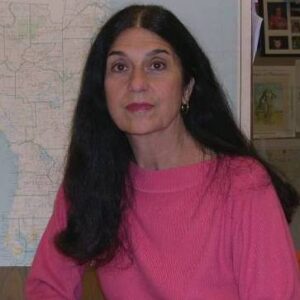 Decades of jungle survey and testing have led to a synthesis of 14,000 years of human occupation in this region of northwest Florida, southeast Alabama, southwest Georgia. Paleo-Indian evidence is densest in the tributary Chipola River but also extends to the coast. Sea-level rise pushed the big river eastward after the Ice Age. Archaic peoples then adapted to climate change, made the earliest pottery 4500 years ago, and deposited shell middens. By Middle Woodland times (AD 350-700) mound ceremonialism included a fascination with light and exotics but not yet economic stratification. All this waned as people began growing maize; Fort Walton-period agricultural chiefdoms emerged by A.D. 1000. By the 1500s, Old-World invaders and colonists caused depopulation and disappearance of indigenous cultures. Creek groups moved south into Spanish Florida, becoming Seminoles here. The largest Maroon community in the U.S. was destroyed by the emerging America. Newer historical archaeology includes the antebellum boomtown of old St. Joseph (1836-1844); lost Civil War forts; recent historic sites; and destroyed landscapes after 2018’s Hurricane Michael.
LEARN MORE ABOUT DR. WHITE
Dr. Katherine Grillo, Associate Professor of Anthropology at the University of Florida
Archaeology of Cattle Cultures in Eastern Africa: New Discoveries from Luxmanda, Tanzania
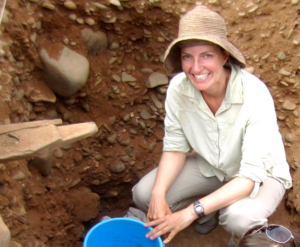
Archaeological research on the “Pastoral Neolithic” of eastern Africa, c. 5000-1200 years ago, has demonstrated long-term positive impacts of ancient herding societies on some of the world’s most famous grassland environments. Genetic and molecular data are likewise illuminating histories of pastoralist connection, migration, and milk consumption that have profoundly shaped African – and global – communities as we know them today. This presentation details new research at Luxmanda, Tanzania, where a herding community over three thousand years ago created the largest Pastoral Neolithic settlement ever found. Surprising results challenge assumptions about the ostensible ephemerality of mobile peoples in the archaeological record, and illuminate pastoralists’ successful strategies for coping with climate stress and other challenges that continue, with amplified consequences, for herding communities in eastern Africa today.
Kate says: "My research interests center on the materiality of cattle-based pastoralism in eastern Africa, and the ways that ceramic technologies, for example, have been a critical part of mobile pastoralist repertoires through time and space. My doctoral research was an ethnoarchaeological study of material culture in Samburu herding communities in northern Kenya, and I am now focusing attention on expanding our archaeological understanding of the Pastoral Neolithic period in eastern Africa.".
LEARN MORE ABOUT DR. GRILLO
Dr. John Kantner Senior Associate Provost at the University of North Florida
Boundedness and Borders in the Chaco World
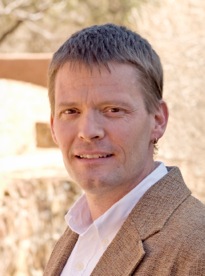 How are borders and boundaries identified in the ancient world? We recognize the importance of these phenomena today, but in the absence of residual features such as the Great Wall of China or Hadrian’s Wall, the “edges” of sociopolitical entities are difficult to find archaeologically. In this illustrated talk, Dr. John Kantner shares recent research he has conducted to identify the borders of the Chaco World, a mysterious tradition that was centered on Chaco Canyon 2,000 years ago in what is now northwestern New Mexico. Using data from pottery, obsidian, and architecture, Dr. Kantner presents the history of a Chaco World borderlands area and what it suggests about how this sociocultural tradition evolved over time.
Dr. Kantner's research focuses on the archaeology of ancient societies, particularly the processes by which complex social and political regional institutions emerged from communities of comparatively simple horticulturists. His research is explicitly comparative, and he has collaborated on projects throughout the United States, Costa Rica, and Peru. In addition to several books, that research appears in journals such as PNAS, Human Nature, Antiquity, Journal of Anthropological Archaeology, Journal of Anthropological Research, Journal of Archaeological Research, Journal of Archaeological Science, and Historical Archaeology.
LEARN MORE ABOUT DR. KANTNER
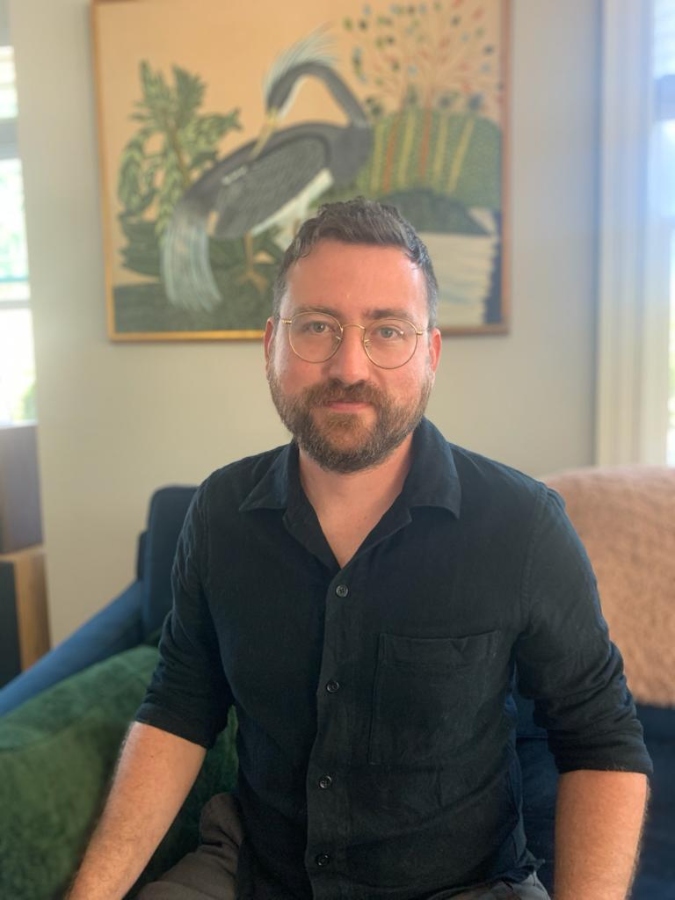 Dr. Zachery Dunseth,
Associate Professor of Anthropology and the Kershaw Chair of the Archaeology of Ancient Israel and Neighboring Lands at the University of California San Diego
Dr. Zachery Dunseth,
Associate Professor of Anthropology and the Kershaw Chair of the Archaeology of Ancient Israel and Neighboring Lands at the University of California San Diego
Dung and Desert Copper: Environmental Archaeology at the Macro and Micro Scale
Settlement patterns in the Negev desert (modern Israel) have experienced significant fluctuations over the past 6000 years. At certain times, the arid landscape was dotted with thousands of sites, including cities, villages, and farmsteads. In other periods, the desert periods were nearly devoid of evidence for human activity. This presentation will specifically focus on one of the earliest waves of large-scale settlement during the Early (c. 3300-2500 BCE) and Intermediate Bronze Ages (c. 2500-1950 BCE). Notably, the former period spans the rise and fall of urban cities to the north, and the latter spans the regional 4.2 kya ‘Megadrought’ aridification event. However, the motivation behind why these desert communities continue to grow and expand in an increasingly hostile environment during this time is still debated.
I begin by explaining the foundation of my approach to studying desert lifeways. This framework is constructed based on experimental and geo-ethnoarchaeological insights gained from premodern Bedouin sites. I delve into both macro- and microarchaeological methods employed to investigate subsistence, animal rearing, and the copper industry across Negev sites. The discussion includes an examination of the results within the context of broader systems, including the desert, Egypt and the Levant during the 3rd millennium BCE.
LEARN MORE ABOUT ZACHARY Jen Green, MA, RPA, Curator of the Florida Museum of Natural History
History of South Florida Archaeology Through Curation-Based Stories at the Florida Museum of Natural History
 The lecture presents a history of the archaeology of South Florida enriched through the records of the Florida Museum of Natural History (FLMNH) at the University of Florida in Gainesville. The South Florida collections at the FLMNH are expansive and represent over 300 discrete archaeological sites across the thirteen southernmost counties. Using curation-based stories, Green will discuss the breadth of the collections housed at the museum from Lake Okeechobee to the Keys and Gulf to the Atlantic coasts. Dozens of archaeologists and their teams have contributed to the rich history of the collections over the last 130 years, and their fascinating contributions have shaped our understanding of the field.
Jennifer Green grew up surrounded by the sub-tropical diversity of Southern Florida, where she spent most of her time exploring outside. Interested in archaeology from an early age, she found a natural progression to studying the Indigenous cultures that once inhabited the landscape around her. Green received her bachelor’s and master’s degrees in anthropology from Florida Atlantic University, where she studied the pre-Columbian history of southern Florida. After a short stint at the University of Tennessee to obtain a doctoral degree, she’s glad to be back in the Sunshine State, where she recently joined the Florida Museum of Natural History as its new collections manager for South Florida archaeology and ethnography.
Dr. Jesse Obert, Professor at the University of South Florida
Social Networks & Cyborgs: Cretan Warriorhood in the Archaic Period
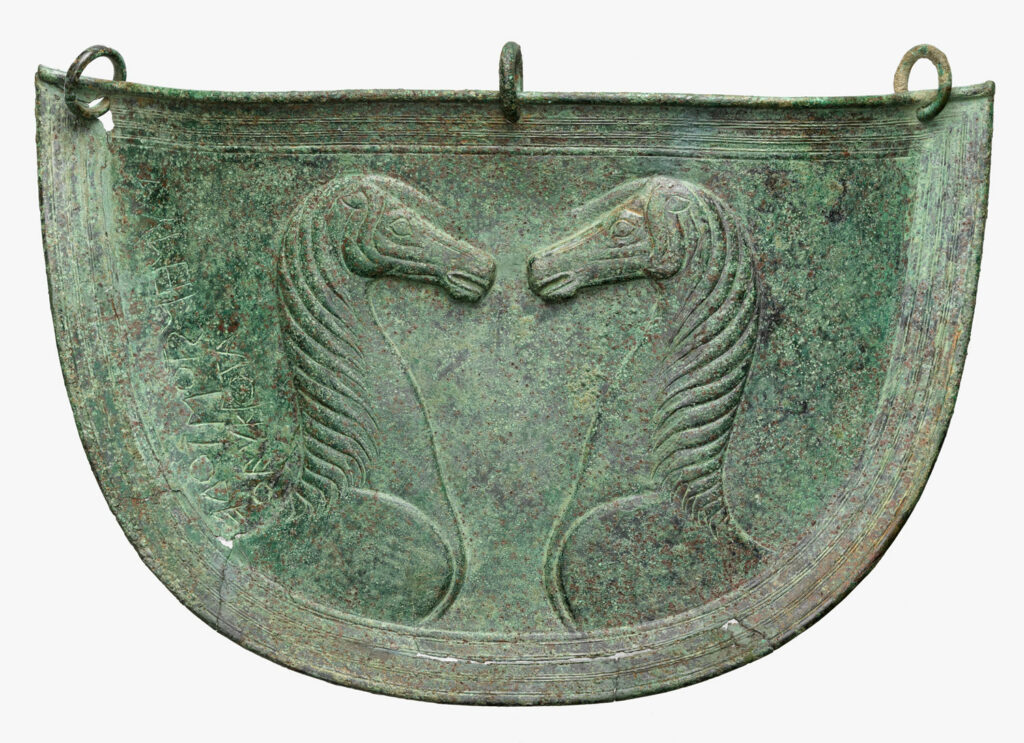
 Dr. Obert presents a new narrative for Cretan warriorhood, focusing in particular on the archaeological evidence for violence on Crete between 700 and 300 BCE. He argues that the incongruity of Cretan warriorhood reflects two distinct ideologies of violence that were concentrated in specific types of ritual space: collaborative camaraderie on the one hand and antagonistic individuality on the other. Despite this opposition, Cretans had to balance both narratives simultaneously, which ultimately developed warriorhood into a full-time vocation. This unique and complex system guaranteed the wealthiest Cretans coveted positions at the top of the socio-political hierarchy, regardless of their appearance, background, or personal identity. These accessible yet gatekept identities set the tenor for military power on Crete in the centuries that followed--the systems that Plato praised in the fourth century were the product of a long-standing and deeply entrenched ideological conflict that had raged across Crete since the seventh century.
Jesse Obert is an interdisciplinary scholar working primarily in the fields of ancient history, archaeology, classics, and digital humanities. He completed his doctorate at the University of California, Berkeley in Ancient History and Mediterranean Archaeology and also holds an MA from University College London in Ancient History. He studies violence, warfare, enslavement, exploitation, and inequality in the ancient Greek world.
Dr. David Gilman Romano, Professor of Greek Archaeology at the University of Arizona
The Sanctuary of Zeus and Sanctuary of Pan at Mt. Lykaion
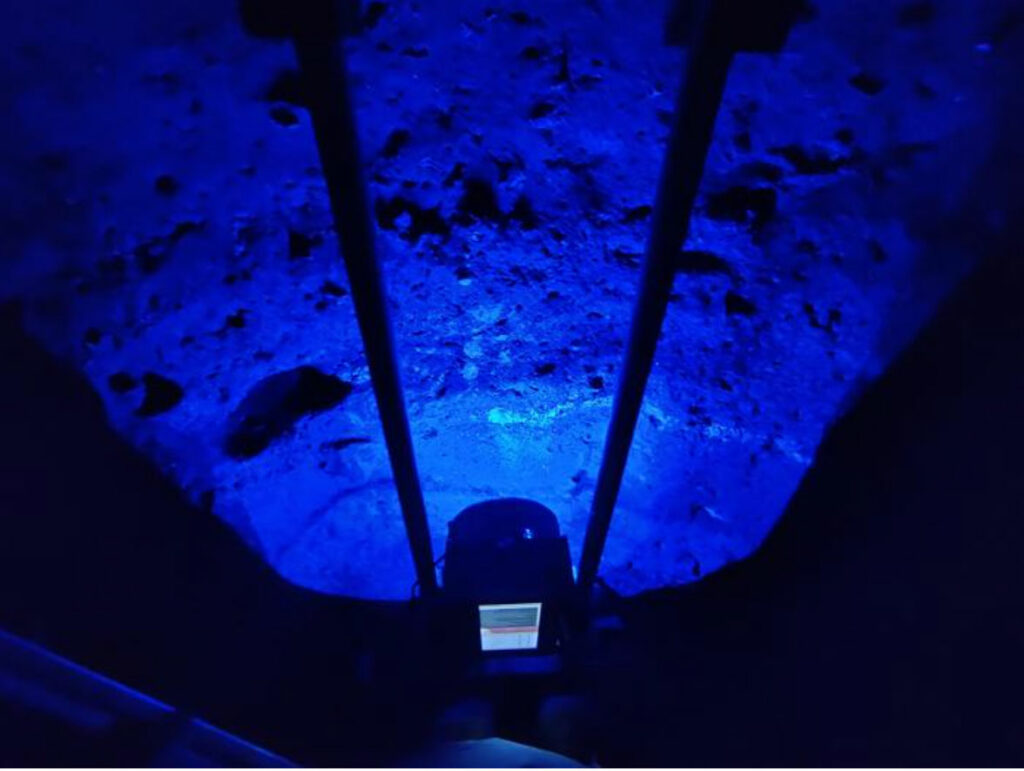
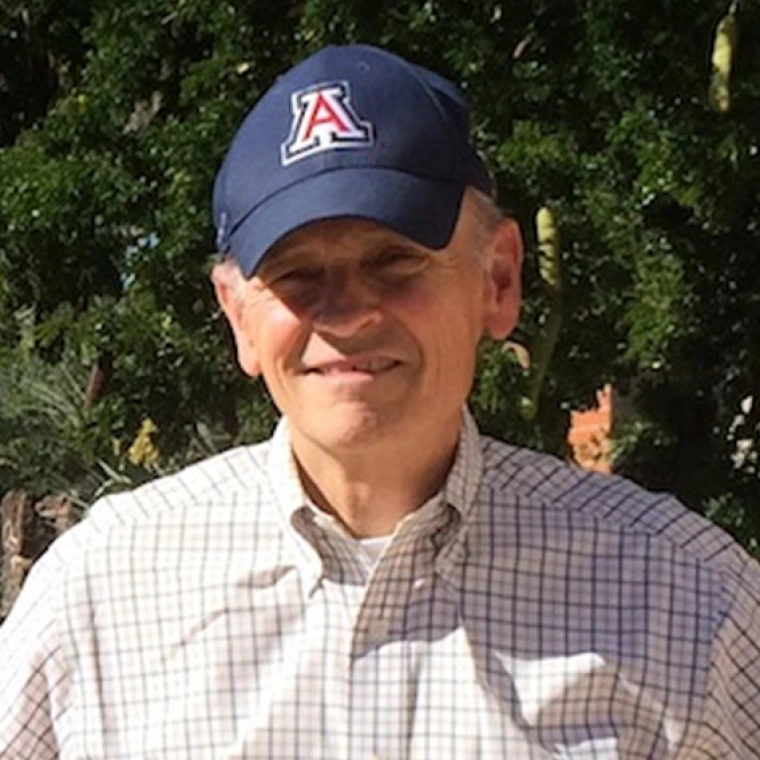 Recent research at Mt. Lykaion, both at the southern summit of the mountain at the Sanctuary of Zeus and in the lower mountain meadow at the Sanctuary of Pan, is leading to new understandings about cult practices at this ancient site in Greece. Answering questions about the origins of Greek cult and Greek athletics are at the heart of the agenda of the Mt. Lykaion Excavation and Survey Project. Since 2004 the project has been working at the site of the Sanctuary of Zeus. The project is co-sponsored by the University of Pennsylvania Museum of Archaeology and Anthropology, the University of Arizona and the Greek Archaeological Service under the auspices of the American School of Classical Studies at Athens.
I am a Classical Archaeologist interested in both the Greek and Roman worlds. My specific interests include the study of ancient cities and sanctuaries, architecture, athletics and computerized applications in archaeology. The Archaeological Mapping Lab, which I direct, works in the fields of digital cartography, GIS, remote sensing, spatial analytical studies as well as databases. Since 2003 I have been the co-Director (with M.E. Voyatzis) of the Mt. Lykaion Excavation and Survey Project, working at the Sanctuary of Zeus at Mt. Lykaion in Arcadia. Since 1987 I have been the Director of the Corinth Computer Project, undertaking a long term study of the planning of Roman Corinth. Since 2004 I have been the Director of Digital Augustan Rome.